Get Healthy!
- Posted January 7, 2026
Ozempic, Wegovy Might Lower Colon Cancer Risk
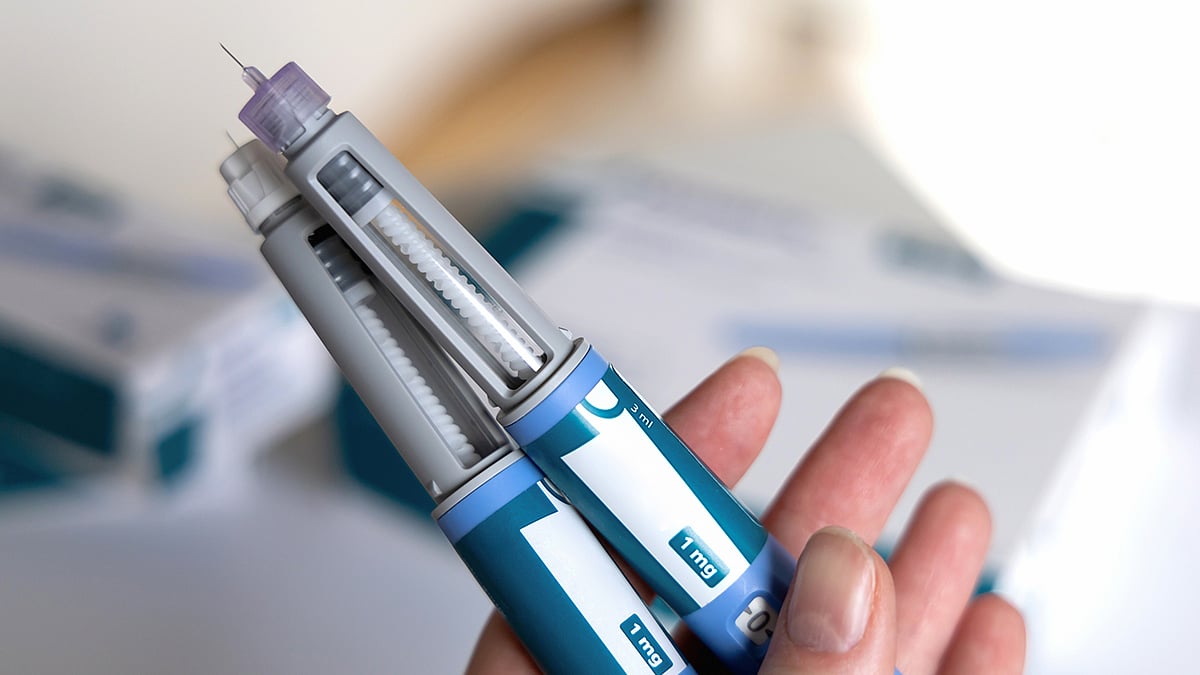
Ozempic and Wegovy might help people avoid colon cancer as well as promote weight loss or control diabetes, a new study says.
People who took a GLP-1 drug were 36% less likely to get colon cancer than people who took aspirin, according to findings scheduled for presentation Saturday at a meeting of the American Society of Clinical Oncology in San Francisco.
“While aspirin has been studied for colorectal cancer prevention, its modest benefit and bleeding risks limit its use,” said lead researcher Dr. Colton Jones, a hematology and oncology fellow at the University of Texas-San Antonio.
“GLP-1 receptor agonists, now widely prescribed for diabetes and obesity, may offer a safer option for both metabolic control and cancer prevention,” Jones said in a news release.
It’s estimated that 150,000 American were diagnosed with colon cancer in 2025 and more than 50,000 died of the disease, researchers said in background notes.
Glucagon-like peptide-1 (GLP-1) drugs mimic the GLP-1 hormone, which helps control insulin and blood sugar levels, decreases appetite and slows digestion of food. The best-known GLP-1 drugs are semaglutide (Ozempic, Wegovy) and tirzepatide (Mounjaro, Zepbound).
For the new study, researchers analyzed health records for more than 281,000 people drawn from a commercial health care database.
Half were taking a GLP-1, and the other half aspirin. Researchers followed the GLP-1 group for about six years, and the aspirin group for about five years.
Results showed a 36% lower risk of colon cancer among those taking a GLP-1 drug.
Benefits were even greater -- a nearly 42% lower risk -- among people whose family or personal history put them at higher risk of colon cancer, researchers said.
Those taking GLP-1 drugs also were less likely to suffer side effects like kidney damage, stomach ulcers or GI bleeding than those on aspirin, researchers said.
However, diarrhea and abdominal pain were more common among those taking GLP-1 drugs.
Researchers warned that the overall benefit for any one person was small. Statistics showed that more than 2,000 people would need to take a GLP-1 drug for one person to have a lower risk of colon cancer.
However, an estimated 6% of Americans are taking GLP-1 drugs, researchers said. That could mean as many as 20 million Americans already are using GLP-1s, and subsequently benefiting from lower colon cancer risk.
As a whole, GLP-1s reduced risk of colon cancer, but when studied individually only semaglutide, liraglutide and dulaglutide had a significant effect, researchers said. Tirzepatide did not show the same significance.
The research team next plans to validate its findings in clinical trials.
“GLP-1 receptor agonists may have benefits far beyond the waistline,” said Dr. Joel Saltzman, vice chair of regional oncology at Taussig Cancer Center, Cleveland Clinic, who reviewed the findings.
“These findings show that they may be an important part of cancer prevention treatment strategies as well,” he continued in a news release. "The preventive benefits of aspirin, nonsteroidal anti-inflammatory drugs and statins in the development of colorectal cancer have been investigated for years. This real-world study suggests that the GLP-1 receptor agonists may have an exciting role in this area.”
Salzman said further research is a priority to understand the promise of these drugs to help prevent cancer.
Findings presented at medical meetings should be considered preliminary until published in a peer-reviewed journal.
More information
The American Cancer Society has more on colon cancer.
SOURCE: American Society of Clinical Oncology, news release, Jan. 5, 2026